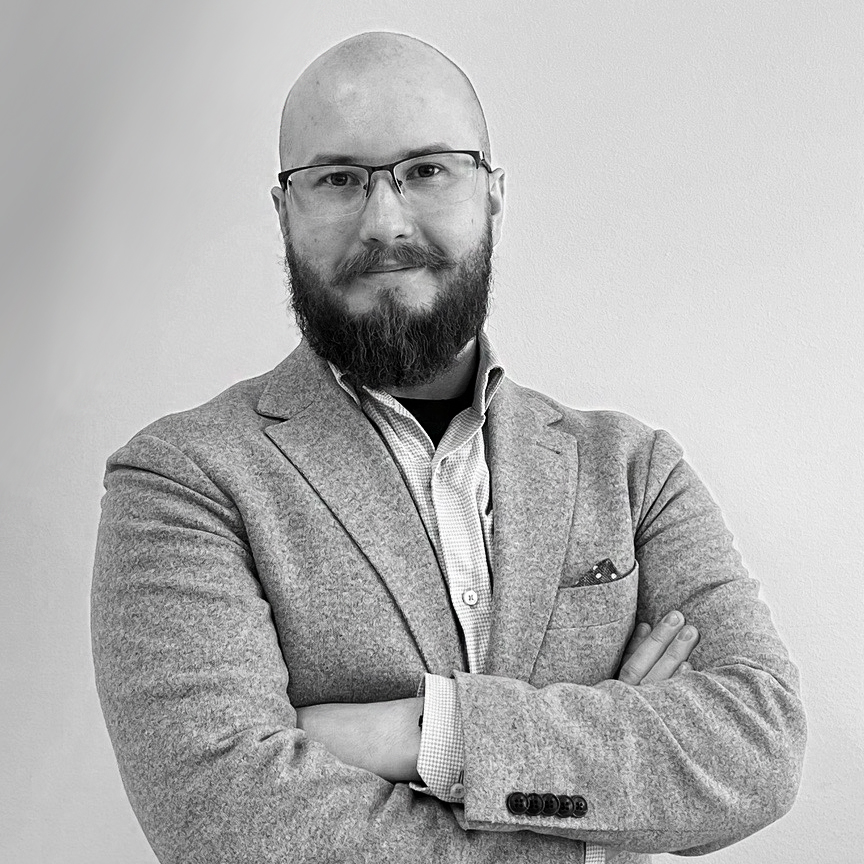
Hey! Pietari Pikkuaho here, Head of AI at Capful. I have been working at Capful for two and a half years, of which the past two years has been on building our GenAI practice from zero. I wanted to share some reflections on working in the fastest-moving field I have ever experienced, and highlight a few things that have stayed relatively constant despite the pace of progress. 

The weird thing about working with AI is that even if you believe in the rapid development of AI, you might still end up being surprised when that pace materializes, because you have failed to internalize the belief. While a lot of our strategy in the AI space has been founded on the belief that GenAI will continue to scale and that we will see rapid development in the coming years, it is one thing to say you believe that. It is another to wake up every six months to a paradigm-setting breakthrough, that requires you to change direction or pivot, because the problems you have been solving have been either solved or invalidated by the technology. 

It is also what makes this by far the most dynamic job I have ever had: the field keeps changing, and so must your strategy, roadmap, and playbook. 

Still, there are a few things that have not (yet) been invalidated about working with GenAI. One is the importance of benchmarks, evaluation, and validation. You need to be able to concretely measure the performance of a new model or tool at a task and benchmark it against what you had before. Moving to a new model is rarely a simple drop-in operation. Different models still have their own quirks and often require extensive validation to make sure they do not break your existing tools. 

Another is that codifying institutional knowledge is real, and your AI solution is fundamentally bounded by your own capabilities. If your team can deliver foresight at a level of 7 out of 10, your AI tools will not magically reach an 8 – because you do not know what an 8 looks like, and neither will your AI tool. This is also why traditional subject matter experts are not just helpful in building AI solutions, they are essential. The best AI tools emerge from marrying domain experts who understand the craft with technologists who understand the technology, and involving both in designing the solution. 

For us, the past year and a half has been a labour of building toward what we see as the future of foresight, and strategy consulting at large. We launched CapfulAI, our internal GenAI-driven foresight platform, in the spring of 2025. Alongside this, we completed a 9-month Business Finland-funded research project exploring agentic reasoning, and are now participating in a new research initiative led by researchers from Aalto University and Oxford examining how AI is reshaping consulting. Looking back, I am incredibly happy that we started as early as we did, because we have needed this time to construct a solid foundation and lay the groundwork for what comes next. This also allows us to move from the foundational phase to the transformation phase, where we can truly start to see what the next era of consulting might look like. 

We see the future moving in two directions: a platform-based future where consulting companies codify their knowledge into digital platforms, and an AI-driven hybrid future where small, nimble teams leverage AI to punch above their weight and solve complex problems. 

Our aim is to work in both. Through CapfulAI, by codifying over 25 years of institutional knowledge into a platform-based offering, and by leveraging the tools we build to deliver best-in-class consulting and solve the most complex problems in strategic foresight. 

After a period of quiet building, we are ready for what comes next. The next six months will be some of the most critical – and exciting – in Capful’s history, and we cannot wait to share what we have learned on our way here. 


Pietari Pikkuaho
Head of AI, Senior Advisor
+358 40 124 1471
pietari.pikkuaho@capful.fi
alt

Head of AI at Capful: Building the Future of Strategic Foresight

Hey! Pietari Pikkuaho here, Head of AI at Capful. I have been working at Capful for two and a half years, of which the past two years has been on building our GenAI practice from zero. I wanted to share some reflections on working in the fastest-moving field I have ever experienced, and highlight a few things that have stayed relatively constant despite the pace of progress. 

The weird thing about working with AI is that even if you believe in the rapid development of AI, you might still end up being surprised when that pace materializes, because you have failed to internalize the belief. While a lot of our strategy in the AI space has been founded on the belief that GenAI will continue to scale and that we will see rapid development in the coming years, it is one thing to say you believe that. It is another to wake up every six months to a paradigm-setting breakthrough, that requires you to change direction or pivot, because the problems you have been solving have been either solved or invalidated by the technology. 

It is also what makes this by far the most dynamic job I have ever had: the field keeps changing, and so must your strategy, roadmap, and playbook. 

Still, there are a few things that have not (yet) been invalidated about working with GenAI. One is the importance of benchmarks, evaluation, and validation. You need to be able to concretely measure the performance of a new model or tool at a task and benchmark it against what you had before. Moving to a new model is rarely a simple drop-in operation. Different models still have their own quirks and often require extensive validation to make sure they do not break your existing tools. 

Another is that codifying institutional knowledge is real, and your AI solution is fundamentally bounded by your own capabilities. If your team can deliver foresight at a level of 7 out of 10, your AI tools will not magically reach an 8 – because you do not know what an 8 looks like, and neither will your AI tool. This is also why traditional subject matter experts are not just helpful in building AI solutions, they are essential. The best AI tools emerge from marrying domain experts who understand the craft with technologists who understand the technology, and involving both in designing the solution. 

For us, the past year and a half has been a labour of building toward what we see as the future of foresight, and strategy consulting at large. We launched CapfulAI, our internal GenAI-driven foresight platform, in the spring of 2025. Alongside this, we completed a 9-month Business Finland-funded research project exploring agentic reasoning, and are now participating in a new research initiative led by researchers from Aalto University and Oxford examining how AI is reshaping consulting. Looking back, I am incredibly happy that we started as early as we did, because we have needed this time to construct a solid foundation and lay the groundwork for what comes next. This also allows us to move from the foundational phase to the transformation phase, where we can truly start to see what the next era of consulting might look like. 

We see the future moving in two directions: a platform-based future where consulting companies codify their knowledge into digital platforms, and an AI-driven hybrid future where small, nimble teams leverage AI to punch above their weight and solve complex problems. 

Our aim is to work in both. Through CapfulAI, by codifying over 25 years of institutional knowledge into a platform-based offering, and by leveraging the tools we build to deliver best-in-class consulting and solve the most complex problems in strategic foresight. 

After a period of quiet building, we are ready for what comes next. The next six months will be some of the most critical – and exciting – in Capful’s history, and we cannot wait to share what we have learned on our way here. 


Pietari Pikkuaho
Head of AI, Senior Advisor
+358 40 124 1471
pietari.pikkuaho@capful.fi
alt

When scenario work is misunderstood

Why would anyone suggest abandoning scenario work right now when uncertainty is greater than ever?

Speaking recently with Kauppalehti, Finland’s leading independent financial newspaper, Karen Harris, Managing Director of Macro Trends at Bain & Company, argued against using scenario work, claiming that today’s world is simply too uncertain for it to be useful. It is a surprising claim, because uncertainty is exactly why we need scenario planning. Scenario work is built for times when the future is foggy, the path ahead unclear, and the stakes are high – in other words, right now.

A forecast is not a scenario


Look closer at Bain’s approach, and it becomes clear that what they are doing is not really scenario work. Harris describes a process that builds a single base case and flexes it up and down by roughly 20 percent. That is forecasting, not scenario planning.

Forecasts can not handle deep uncertainty. They are built on probabilities, not possibilities. When those probabilities fall apart, Bain assumes scenario work has failed, when in fact, they never practiced it in the first place.

Real scenario work thinks differently


True scenario work was born from the need to escape the forecasting mindset, exactly the kind of thinking Bain represents. Instead of “ticking boxes in a dimly lit room using questionable methods and average ideas”, scenario planning was designed to open new perspectives and challenge entrenched assumptions. The pioneers of scenario work – including Herman Kahn, Pierre Wack, Shell, SRI International, and GBN – set clear principles from the start: scenarios should never be based on probabilities. Scenarios describe what is possible, not what is probable. So what does that mean today?

  • Scenarios represent possible worlds, not probable ones.
  • All scenarios are treated as equally possible, to ensure balanced consideration.
  • The goal is not to predict the most likely future, but to understand how different futures could shape our choices today.

Scenario thinking frees organisations from the illusion of certainty. It helps leaders prepare for genuine uncertainty, structural change, and unexpected disruption. Forecasts, on the other hand, lean on trends and historical data and therefore miss the real shifts and inflection points that change the game.

Questions before answers


The path from scenario thinking to forecasting is paved with probabilities. Once we start talking about the “likelihood” of future events, we have already left the world of scenarios behind. Scenarios help us ask the right questions. Forecasts chase the right answers. Strategy often fails because leaders rush to seek answers before defining the right questions.

Harris is right about one thing: the external environment matters. But in strategic scenario work, the starting point is always internal. First, we define the focus – an investment, a business strategy, a technology portfolio, and only then identify the external uncertainties that matter most for that focus. That is how scenario work connects directly to strategic decision-making.

The right tools make the difference


Scenario work requires both mindset and method. Without the right tools, it easily slips back into forecasting or gets dismissed as too abstract to be useful. Capful’s Scenario Builder™ helps create logical, well-reasoned, and clearly differentiated scenarios, visualised on an intuitive scenario map. Our own CapfulAI tools support data analysis, trend detection, and exploration of alternative future development paths.

Scenario work – the fuel of a living strategy


Forecasts and scenarios serve entirely different purposes. The essence of scenario work is to use uncertainty, not flee from it. Bain’s way of treating scenarios as isolated forecasts risks locking strategy into the past. Real scenario work, by contrast, helps organisations see and seize future opportunities. Today, as geopolitical and economic turbulence make the future especially uncertain, scenario work offers a way to navigate complexity, to spot opportunities and risks early, and to build a genuine strategic edge.

At Capful, we connect scenario planning with the continuous monitoring of the external environment. By tracking early signs of which scenarios are starting to unfold, we help clients assess whether their short-term strategies still stand on solid ground. That is how strategy stays alive, evolving proactively and deliberately, not reactively in crisis mode.

Arto Kaunonen
Founder, Senior Partner, KM, MBA
+358 50 356 0717
arto.kaunonen@capful.fi

Arto Kaunonen kuva

What could the future of university education look like in 2035?

The University Education Scenarios 2035 project examines how major changes around us, such as global warming, geopolitical tensions, changing values and ideology, and digitalisation, will affect the future of university education.

Together with Capful, the University of Helsinki is using scenario work to build a vision of alternative futures for university education. The aim of the work is to inspire and stimulate debate on the future possibilities of the University of Helsinki and the role of university education in the long term, up to 2035.

The work will involve a wide range of stakeholders at the University of Helsinki to illustrate alternative scenarios for the future of university education. These scenarios will help to reflect on the new opportunities, uniqueness and characteristics of the University of Helsinki in the future. In addition, the ways and means of teaching, as well as the social and international impact of the future. The results of this work will later serve as a basis for clarifying the University’s teaching philosophy.

The project was launched with a workshop, during which a wide range of issues related to the changing environment were discussed. In addition, focus group interviews and an extensive survey were conducted as background work. Three scenarios were constructed and then enriched and deepened through workshop. The project will culminate in a symposium in the spring to discuss the scenarios and their implications.

Want to hear more? Contact us:

Paul Hermansson kuva

Paul Hermansson
Senior Consultant, M.Soc.Sc.
+358 50 574 9894
paul.hermansson@capful.fi

Become an International Certified Future Strategist (ICFS)

Companies and organizations act in an increasingly complex environment. The speed of change is tremendous. In order to successfully cope with rapid change companies need to understand their business environment as well as the future development.

That is why we have developed a tailored education program with the objective of leading to International Certified Future Strategist (ICFS) and a new job category in Europe.

Until today, there has been no such profession in Europe and we see the urgent need for one to be developed and explored, should Europe be able to successfully compete with other regions of the world. Only by understanding the rapidly changing and increasingly complex world can companies, organisations and public authorities take a lead. The Future Strategist is vital to this aim.

We are delighted to announce the dates for the 2023 ICFS course that will start on February 2023. As usual, the 12-day programme will focus on environmental analysis, scenario, vision, and strategy building. The ICFS is composed of four modules and taught by international business professionals with extended experience in the field.

The programme fee for the ICFS course is €7,000 (all prices are excluding VAT). This is inclusive of lunches and course materials, but exclusive of travel and related costs.

We will repeat venue due to the positive feedback from previous participants. This means we will be holding the 2023 course in Stockholm, Sweden.

The ICFS modules and dates are the following:

Module 1: Environmental analysis 1–3 February
Module 2: Scenarios 8–10 March
Module 3: Vision & strategy analysis 17–19 April
Module 4: Strategy & action 10–12 May
Module 5: Follow-up and certification 7 June

Please visit the programme website here and feel free to contact us for further information.

How to apply:

For registration, please contact Mikael or Jari. You can also arrange a personal demonstration by leaving us your contact information – we will be happy to tell you more about the program.

Mikael Paltschik kuva

Mikael Paltschik, Senior Advisor (+358 50 344 6953)
mikael.paltschik@capful.fi

Jari Puhakka kuva

Jari Puhakka, Senior Partner (+358 40 562 2675)
jari.puhakka@capful.fi

Making sense of the senseless – understanding implications of the war in Ukraine

This cannot happen! This war is insane! What on earth are they trying to achieve? Outcries like these have been common since end of February. But unfortunately, Russia’s war against Ukraine is a fact. Another fact is that all the signs were there, including US intelligence predictions of the date when the invasion would start. But we could not interpret things correctly, mostly because the scenario of a war in Europe was so awkward. A tragedy is now unfolding before our eyes. But as decision makers, responsible for our organizations, we must make sense of the situation, cope with plausible tomorrows, and make decisions today.


SEEING PAST THE BIASES IS CRUCIAL IN SENSEMAKING


In real-time we see what is happening. Media, both traditional and social, report of different aspects. One challenge we have is that there are probably very few “objective” reports, all are looking at the situation through lenses, some intentionally stressing some aspects, some conveying wishful thinking, some pure propaganda etc. To understand why who is saying what is not an easy task.  And at the same time our perceptions and interpretations are very tweaked by our personal set of values.


DO YOU HAVE THE TOOLS TO MAKE SENSE OF THE SITUATION AND ITS IMPLICATIONS?


The war in Ukraine was not more than days old when the first companies announced that they will withdraw from Russia. This was not based only on the sanctions imposed, but also on other considerations, including moral and ethical. Other decision might be less dramatic, but the situation is new, the playing field has tilted. Few organizations have scenarios and contingency plans for the situation with a war in Europe. These would be helpful to have, when making decisions in a new, and partly unknown situation. It is of utmost importance to start working on such plans now. Doing so, one must consider several plausible ways the war might unfold. Fortunately, there are tools and practices to support the planning process.

Lot of thinking power and energy is devoted to the immediate and acute challenges. The magnitude of the refugee tragedy is enormous. The anticipated recovery from the pandemic will be postponed.  The global financial system faces challenges etc.  At the same time, we already see that the war Russia has started has impacted other processes. Besides EU revamping unity and acceleration of discussions of NATO membership in Finland and Sweden, e.g. energy transition is not only a climate issue anymore, but also a security issue. And global sourcing and logistics are looked at in new ways. Recycling of especially rare earth metals will be looked at more intensively. A lot of issues emerge. Each organization face uncertainties that have not been on the radar screen before the war. It is beneficial to take a fresh look at the set of uncertainties impacting how the future context of the organization’s activities might unfold. Scenario planners are helpful doing this.


KEEP A COOL HEAD


Individuals are mostly very optimistic. Kahneman and Tversky made this evident in their seminal research. We are bad at dealing with unwanted futures. It is easier to condemn a war than dealing with the fact that there is a war and at least most medium-term consequences are challenging. Fortunately, structured scenario analysis is helpful. Analytical vigour can set personal feelings at rest for a while. The President of Finland, Sauli Niinistö, expressed himself along the same lines in his press release from March 3rd, 2022 “In the midst of an acute crisis, however, it is particularly important to keep a cool head and to assess with care the impact of past and possible future changes on our security – not hesitating, but with care”. For decades the scenario community has helped decision makers to keep a cool head while making sense of a senseless situation.

How do we ensure a just, prosperous, and resilient Nigeria when it turns 100 in 2060?

This question underpins the Which Way Nigeria – Citizen Scenarios to 2060 (CS60) initiative with the aim of first creating scenarios for the country up to 2060 and then offering a roadmap towards achieving Nigerians’ desired path to the future. CS60 has retained Capful to facilitate the participatory scenario process, which engages civil society in exploring and debating the future of Africa’s powerhouse. 

“Which Way Nigeria – Citizen Scenarios to 2060 provides citizens the very rare opportunity to create the future that they want, not what officials and barons dictate. The initiative is also geared to spark the entire country to be the change and live the change to create the Nigeria that is a global player, not the hobbling giant of Africa.”

– Victoria Ibezim-Ohaeri, Olamide Udoma-Ejorh, Bell Ihua, Chukwumerije Okereke, Odeh Friday, Oluseun Onigbinde, Aloysius Bongwa, Richard Dion
Citizen scenarios 2060: A necessary and hard look into the future

The citizen scenarios stem from the existential questions that Nigeria and its citizens have to ask. Topics such as energy transition, agriculture, urban and regional development, education, and health are pivotal to Africa’s largest economy. With Nigerian civil society organizations (CSOs) taking the lead, CS60 brings together leading local and international experts, whilst Capful brings its scenario expertise to the table. Capful’s Scenario Builder® helps create logical, plausible, and differentiated scenarios for Nigeria until 2060. The algorithm-based tool produces a set of initial scenarios that are illustrated in an interactive map. The map helps select logical and thought-provoking alternatives for further examination and brings out novel viewpoints that inspire futures thinking among participants involved in the scenario process.

Last week, CS60 completed its third workshop, with participants exploring the key drivers, uncertainties, and potential outcomes relating to Nigeria’s future and describing the country’s alternative futures. In addition to end-state descriptions, we will define storylines, cause-and-effect relationships, and quantifications of the scenarios to pave the way for further analysis on the implications of the scenarios for Nigeria.

After the scenario phase, CS60 moves on to outline a roadmap towards achieving the desired future Nigeria through a combination of leadership, policy reform, and investments. The roadmap, created by CSOs, will include intended milestones tied to the timeline and it will serve as the basis for actions needed to achieve a just, prosperous and resilient Nigeria that its citizens deserve.

“With its abundant resources and its population likely to hit 400 million by 2050, Nigeria holds immense future potential. Helping facilitate the scenario process that engages Nigeria’s civil society has been both demanding and meaningful.”

– Arto Kaunonen, Capful’s Founder and Senior Partner

Interested?

Contact us


Arto Kaunonen
Founding Partner
050 356 0717        
arto.kaunonen(at)capful.fi

Capful cooperates with Kemira in scenario work

Capful and Kemira have collaborated in scenario work with the aim to envision the future of water management by 2040.

What will the future of water management look like? Will citizens become more aware and activate around clean water topics? Will conflicts erupt because of water scarcity? Will megacities and global corporations take a more prominent role – also in water provision? How does digitalization impact the clean water value chain? What about regulation?

To understand what the future of water management might hold, an influential panel of water sector experts were invited to discuss different challenges, opportunities and possible paths ahead.

The “what if?” stories presented in this report can give food for thought for strategic discussions, inspire cooperation, technology development, and encourage new and innovative ways of thinking.

The decisions we make today about water access, quality, solutions for water treatment and water reuse impact the future living conditions of communities around the world. What will actually happen? No one knows. But it’s important to consider the possibilities.

Learn more about the “Water management 2040 -future scenarios” and download the report here.

Interested in scenario work?

Contact us!


Jari Puhakka
Senior Partner
040 562 2675
jari.puhakka(at)capful.fi