The world around us is changing rapidly. Geopolitical tensions, technological disruptions and climate change are challenging societies in unprecedented ways. At the same time, crisis preparedness and resilience are becoming one of Finland’s most significant export strengths. 

Launched by the Confederation of Finnish Industries (EK), Resilience Center Finland brings together Finnish expertise in security of supply and comprehensive security – making it visible and accessible to international audiences. 

Capful’s role in this initiative is a natural fit. For over two decades, we have helped companies and public sector organisations navigate an evolving operating environment through scenario planning and strategic foresight. These are exactly the capabilities needed to build a crisis-resilient future. 

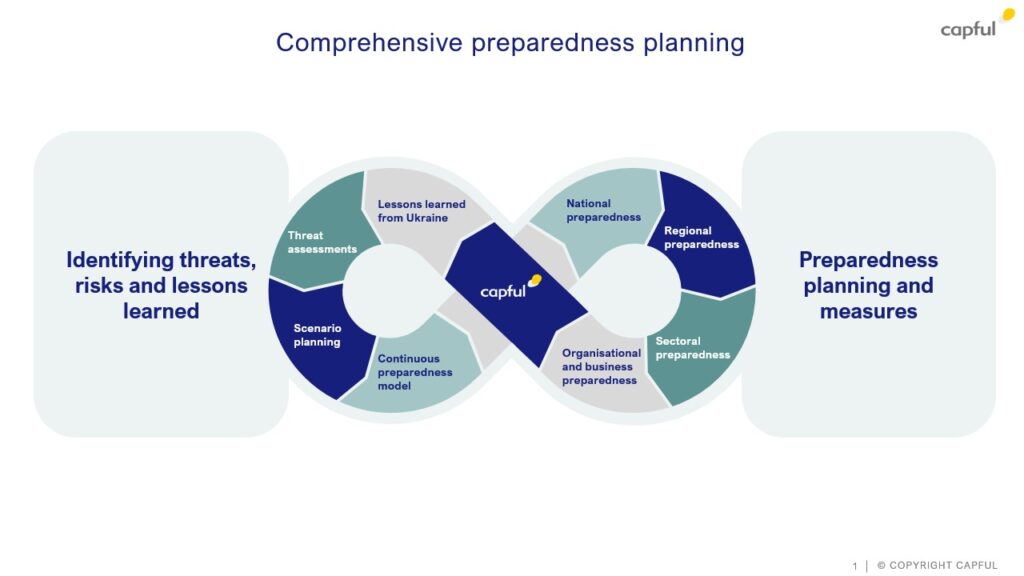
Picture 1. Capful as a preparedness partner

Finland’s expertise in comprehensive security and preparedness is truly unique. We are excited to contribute to exporting this know-how together with a strong network of partners. 

Learn more about Resilience Center Finland: www.resiliencecenter.fi 

Want to hear more? Contact us!

Kimmo Kivinen kuva
Kimmo Kivinen

Senior Partner, MMM
+358 50 540 9446
kimmo.kivinen@capful.fi

Capful joins Resilience Center Finland as a key partner 

The world around us is changing rapidly. Geopolitical tensions, technological disruptions and climate change are challenging societies in unprecedented ways. At the same time, crisis preparedness and resilience are becoming one of Finland’s most significant export strengths. 

Launched by the Confederation of Finnish Industries (EK), Resilience Center Finland brings together Finnish expertise in security of supply and comprehensive security – making it visible and accessible to international audiences. 

Capful’s role in this initiative is a natural fit. For over two decades, we have helped companies and public sector organisations navigate an evolving operating environment through scenario planning and strategic foresight. These are exactly the capabilities needed to build a crisis-resilient future. 

Picture 1. Capful as a preparedness partner

Finland’s expertise in comprehensive security and preparedness is truly unique. We are excited to contribute to exporting this know-how together with a strong network of partners. 

Learn more about Resilience Center Finland: www.resiliencecenter.fi 

Want to hear more? Contact us!

Kimmo Kivinen kuva
Kimmo Kivinen

Senior Partner, MMM
+358 50 540 9446
kimmo.kivinen@capful.fi

When scenario work is misunderstood

Why would anyone suggest abandoning scenario work right now when uncertainty is greater than ever?

Speaking recently with Kauppalehti, Finland’s leading independent financial newspaper, Karen Harris, Managing Director of Macro Trends at Bain & Company, argued against using scenario work, claiming that today’s world is simply too uncertain for it to be useful. It is a surprising claim, because uncertainty is exactly why we need scenario planning. Scenario work is built for times when the future is foggy, the path ahead unclear, and the stakes are high – in other words, right now.

A forecast is not a scenario


Look closer at Bain’s approach, and it becomes clear that what they are doing is not really scenario work. Harris describes a process that builds a single base case and flexes it up and down by roughly 20 percent. That is forecasting, not scenario planning.

Forecasts can not handle deep uncertainty. They are built on probabilities, not possibilities. When those probabilities fall apart, Bain assumes scenario work has failed, when in fact, they never practiced it in the first place.

Real scenario work thinks differently


True scenario work was born from the need to escape the forecasting mindset, exactly the kind of thinking Bain represents. Instead of “ticking boxes in a dimly lit room using questionable methods and average ideas”, scenario planning was designed to open new perspectives and challenge entrenched assumptions. The pioneers of scenario work – including Herman Kahn, Pierre Wack, Shell, SRI International, and GBN – set clear principles from the start: scenarios should never be based on probabilities. Scenarios describe what is possible, not what is probable. So what does that mean today?

  • Scenarios represent possible worlds, not probable ones.
  • All scenarios are treated as equally possible, to ensure balanced consideration.
  • The goal is not to predict the most likely future, but to understand how different futures could shape our choices today.

Scenario thinking frees organisations from the illusion of certainty. It helps leaders prepare for genuine uncertainty, structural change, and unexpected disruption. Forecasts, on the other hand, lean on trends and historical data and therefore miss the real shifts and inflection points that change the game.

Questions before answers


The path from scenario thinking to forecasting is paved with probabilities. Once we start talking about the “likelihood” of future events, we have already left the world of scenarios behind. Scenarios help us ask the right questions. Forecasts chase the right answers. Strategy often fails because leaders rush to seek answers before defining the right questions.

Harris is right about one thing: the external environment matters. But in strategic scenario work, the starting point is always internal. First, we define the focus – an investment, a business strategy, a technology portfolio, and only then identify the external uncertainties that matter most for that focus. That is how scenario work connects directly to strategic decision-making.

The right tools make the difference


Scenario work requires both mindset and method. Without the right tools, it easily slips back into forecasting or gets dismissed as too abstract to be useful. Capful’s Scenario Builder™ helps create logical, well-reasoned, and clearly differentiated scenarios, visualised on an intuitive scenario map. Our own CapfulAI tools support data analysis, trend detection, and exploration of alternative future development paths.

Scenario work – the fuel of a living strategy


Forecasts and scenarios serve entirely different purposes. The essence of scenario work is to use uncertainty, not flee from it. Bain’s way of treating scenarios as isolated forecasts risks locking strategy into the past. Real scenario work, by contrast, helps organisations see and seize future opportunities. Today, as geopolitical and economic turbulence make the future especially uncertain, scenario work offers a way to navigate complexity, to spot opportunities and risks early, and to build a genuine strategic edge.

At Capful, we connect scenario planning with the continuous monitoring of the external environment. By tracking early signs of which scenarios are starting to unfold, we help clients assess whether their short-term strategies still stand on solid ground. That is how strategy stays alive, evolving proactively and deliberately, not reactively in crisis mode.

Arto Kaunonen
Founder, Senior Partner, KM, MBA
+358 50 356 0717
arto.kaunonen@capful.fi

Arto Kaunonen kuva

Trade wars as signals from the future – rethinking conflict

The headlines speak of tit-for-tat tariffs, supply chain woes, faltering alliances, and a retreat from globalisation. We tend to frame trade wars in the language of crisis – conflict, disruption, escalation, retaliation. But from a foresight perspective, trade wars can also offer a window into what’s next. Beneath the turbulence, we may see signals of economic redesign: shifts from just-in-time efficiency to supply resilience, from liberal openness to sovereignty-driven autonomy, or from globalisation to value-aligned economic blocs. The question isn’t whether trade wars are good or bad, but what they can reveal about new systems that may be emerging.

Reframing trade wars – conflict as signal

Conflict – whether geopolitical, economic, social, or environmental – is traditionally framed as a problem to be solved or a crisis to be managed. But in the discipline of foresight, conflict can be reframed as a meaningful signal – offering clues of deeper systemic shifts, hidden tensions, or the potential birth of new structures. Rather than being interpreted as noise or anomalies, conflicts can be treated as rich inputs into scenario construction.

From a foresight perspective, trade wars can also be viewed differently – less like economic blunders, political weapons, or miscalculations and more like “messy field tests” for alternative global futures. Rather than despair, we can ask: What values are clashing? What systems are no longer working? What is struggling to emerge through this turbulence? What future systems are being stress-tested through these confrontations?

What can conflicts reveal to a foresight practioner?

  • Many systemic conflicts, like trade wars, can reveal friction between old and emerging systems. For example, the US-China trade dispute may be less about tariffs and more about the end of an era where openness reigned over national sovereignty and strategic control.
  • Conflicts can expose the fragility of assumed “normals” – like just-in-time supply chains and liberalised trade – highlighting potential design flaws we’ve normalised. For example, war-induced global fertiliser shortages have revealed the dependency risks in industrial agriculture, prompting questions about food sovereignty.
  • Conflicts can act as accelerators of futures, catalysing innovation or adaptation. New alliances, business models, governance tools, and technologies often emerge under pressure. For example, Russia’s invasion of Ukraine triggered massive European investment in clean energy, faster than years of climate negotiation had achieved.
  • Conflicts can surface latent values and cultural shifts regarding justice, sovereignty, safety, sustainability etc. By mapping which values are being contested, foresight practitioners can anticipate where shifts in public mood and policy may be headed. For example, debates around AI regulation are not just technical – underlying are cultural conflicts about agency, transparency, and human dignity.

Trade wars – what futures are being prototyped?

Trade wars are not just about goods and tariffs; they are “high-intensity” signals of multiple larger forces at play. These signals point toward deeper reconfigurations in how economies will be built and governed. For example, the EU’s Carbon Border Adjustment Mechanism (CBAM) is not just an environmental policy – it could be viewed as a proto-framework for climate-aligned trade blocs, where more green tariffs, resource-based disputes, and carbon accountability will shape future alliances. Or the semiconductor battles between the US and China are an indication of emerging techno-nationalism, showing how deeply technology is now a terrain of national power. Sanctions on chip manufacturing, rare earth elements, and AI components indicate that digital infrastructure is no longer neutral – it’s a strategic asset.

Putting on our scenarist’s hat, we could interpret current trade tensions as early-stage models of competing futures, such as:

Future A: The great decoupling
A fragmented world of competing techno-blocs, with parallel internets (think of splinternet), supply chains, and currencies. Economic sovereignty becomes the organising principle.

Future B: The polycentric regenerative economy
Trade begins to reorganise around robust, regionally anchored systems that prioritise circular economies, ecological stewardship, and collaborative governance. What emerges is a post-global economy shaped more by place-based resilience than global efficiency.

Future C: The coordinated digital commonwealth
An intriguing vision of supranational cooperation via AI governance and blockchain-based compliance systems. Trade as a programmable, traceable, trustable mesh – no longer reliant on treaties alone.

Each scenario carries its own opportunities and maladies. Our role is not to pick one, but to explore the possibility space they illuminate.

Implications for foresight and strategy

What could all this mean for those of us working in futures thinking, strategic planning, or policy design? As foresight practitioners, we serve as interpreters of trade wars and other conflicts, extracting insights not just from what is happening, but from what it hints might come next. Specifically, we can

  • Rethink baselines. What we often reference as “normal”, such as the relatively frictionless trade environment of 2015, may itself be an anomaly: a brief convergence of geopolitics, technology, and economic ideology. To use it as a benchmark is to mistake a moment for a model. The task isn’t to restore a past equilibrium, but to make sense of the transition and help shape what comes next.
  • Mine the noise for signals. Trade wars and related disruptions can be read as weak signals of deeper design debates: Who controls data? What defines a critical resource? What supply chains are too critical to fail – and who decides? What is fair trade in a warming world? What new trade disputes might arise over water, carbon, food, or biodiversity?
  • Stress-test strategies. Use conflict scenarios, like trade wars, to stress-test strategies or value chains under turbulent, divergent futures to uncover hidden vulnerabilities and potential redesign alternatives.
  • Watch for wildcard catalysts. Unexpected developments– like an AI-generated trade agreement bypassing traditional diplomacy, a climate-triggered embargo on water-intensive exports, or a citizen-led boycott movement – could rapidly challenge assumptions. In foresight, staying attuned to such outliers is essential.

Reframing mindset – conflict not as breakdown, but as transition

The “conflict-as-signal” mindset challenges the reactive, linear thinking often found in our response to crises like trade wars. It invites leaders and strategists to:

  • Stay curious during disruption
  • Resist premature conclusions
  • Ask what is being made possible – even amidst collapse. What adjacent possibilities can trade wars unlock?

Instead of analysing trade wars through the typical geopolitical or economic lens, we could examine them as “living prototypes” of emerging systems in global governance, technology sovereignty, or climate-aligned economics – revealing how nations are reimagining power, autonomy, interdependency, and values in a multipolar world.

So – what if we understood tariffs, sanctions, and decoupling not as breakdowns of global order, but as crude blueprints for the next phase of economic design? We could then also explore how trade wars may be unintentionally accelerating innovation in localised manufacturing, green technology independence, digital trade ecosystems and more. By shifting our perspective, we open up space to ask not just what’s breaking, but what’s being built.

Utilizing foresight in continuous strategizing & building the capability for it – Part 2

This is the second part of a two-part article series where I discuss three topics:

  1. Defining, measuring and developing a strategic foresight capability
  2. Continuous strategic foresight: what & how
  3. Integrating continuous strategic foresight into continuous strategizing, i.e. strategic conversations and management

I had the privilege of presenting these ideas to a large audience of interested executives and experts at Capful‘s breakfast seminar in Helsinki on the 8th of March, 2023.

Continuous strategic foresight: what & how

Adopting strategic foresight as a continuous activity is an increasingly popular issue. Like when eating the metaphorical elephant, it is better to start with small bites. If the following, I will focus on a specific application area: developing the means to do strategic foresight for continuous strategic decision-making. Here, you apply the capability I talked about in my previous article.

Methods for continuous foresight are manifold, but the two main ways to generate futures knowledge are horizon scanning and environment monitoring. To many, monitoring and scanning sound like two sides of the same coin, but they have a distinct and meaningful differences. Monitoring takes the inside-out perspective to foresight: it is based on the strategic assumptions you’ve made about the future(s) of your environment that make or break your strategy. The idea is to monitor whether these assumptions are becoming true or not, and the drivers impacting their fate. In monitoring, the foresight work is scoped, whereas in horizon scanning, the purpose is much more about exploration and outside-in thinking – discovering and analyzing weak signals and emerging trends that might impact your organization’s performance. High-quality strategic foresight applies both methods.    

Along with methods, continuous foresight requires a clear enough scope to ensure it does not become too open-ended. In addition, you need a process or a defined way of working with timed deliverables, assigned resources and roles with tasks and systems and tools to facilitate collaborative data gathering, analysis and results dissemination. There might be industry-specific data sources that provide information of sufficient depth, but foresighters increasingly rely on AI, advanced search methods, personal networks and their research – including real and virtual experiences. Ultimately, what is generated are signals, signal collections and initial what-if questions.

Whether the foresight “content” or futures knowledge is generated by a consultant, an in-house researcher, or the top management team themselves, it is useless without proper integration into the strategizing processes and forums in the organization. It is here where sensemaking – understanding the implications of futures knowledge to us – ultimately happens. These “Aha!” moments are notoriously difficult to disseminate since people must have them on their own. Foresight must become a part of strategic decision-making.   

Integrating continuous strategic foresight into continuous strategizing

Continuous strategic decision-making requires vision and facts, including customer or stakeholder feedback, financial performance figures, performance KPI outcomes and so on. Truly integrating strategic foresight with continuous strategizing in your organization is not only about adding one “new” type of information into your decision-making. While foresight can be defined as a type of knowledge about the potential futures of phenomena or whole systems, successfully applying it in decision-making requires fundamental changes in your entire way and structure of management. Without these changes, getting the full – or even necessary – benefits of strategic foresight is impossible. What do you need to reconsider and reconfigure in your management model to take full advantage of strategic foresight?

First, using strategic foresight requires you to adjust the context in which you have strategic conversations and “do” continuous strategizing. By context we mean the vision of the organization, organizational objectives, plans and assumptions about the future of the external environment that affects the success of the organization. The last bit of the context is too often not made explicit: the assumptions live in the minds of a select few and might not be scrutinized but only taken as granted or as obvious “truths”. Strategic foresight necessitates making the assumptions explicit and shared in the organization, because they form a major part of the foundation for successful continuous foresight. As I discussed earlier, monitoring the assumptions we have and how they become real or not is a fundamental part of strategic foresight.   

Second, benefiting from strategic foresight requires rethinking what you need to do and achieve in strategizing. In other words, you have to reconfigure how you have strategic conversations in the organization. The party responsible for strategizing, often a CEO or a director, must prepare and set an agenda for shared sensemaking, where foresight is discussed and conclusions about foresight are made. The party must have futures thinking capabilities and be able to facilitate the shared foresighting, sensemaking and options assessment.

Third and final, the management structures and processes must be addressed to take full advantage of strategic foresight. Integrating foresighting as an activity and the results of foresight from other parties to strategic conversations often lead to changes in existing strategizing forums, i.e., their timing, length, agenda and participants. The organization’s management model – when and where critical decisions are made throughout the year – might need to be adjusted, in addition to different processes and interfaces where strategic decisions are turned into action.

In summary, treating foresight as just one type of information to be fed into strategic conversations undercuts its total value to strategic management.

Let’s connect if you want to talk more

Tomi Heikkinen kuva

Tomi Heikkinen
Director

tomi.heikkinen@capful.fi

+358 40 709 9530

Linkedin

Utilizing foresight in continuous strategizing & building the capability for it – Part 1

This is the first part of a two-part article series where I discuss three topics:

  1. Defining, measuring and developing a strategic foresight capability
  2. Continuous strategic foresight: what & how
  3. Integrating continuous strategic foresight into continuous strategizing, i.e., strategic conversations and management

I had the privilege of presenting these ideas to a large audience of interested executives and experts at Capful’s breakfast seminar in Helsinki on the 8th of March, 2023.

As operating environments face more and more radical uncertainties, organizations across industries and sectors are looking for ways to cope and flourish. A key instrument is building their foresight capabilities. But what exactly constitutes a foresight capability, and what should one consider when developing it? Given our experience, we at Capful can provide helpful insights to these questions.

What do you need to develop your strategic foresight capability?

The basis of any strategic foresight practices, processes or functions in organizations is a clear understanding of the organizational needs, objectives and desired outcomes for strategic foresight. Consider the use cases for foresight that are critical to your organization’s short, mid- and long-term performance. What decisions or processes require regular support by foresight?

Answering the above questions can lead to utopian dreams about where and how foresight should be utilized, which is good – being ambitious is only useful here. However, temper your plans with realistic expectations about how well your organization can utilize the results of strategic foresight currently and in the near term. Eat the foresight elephant one bite at a time.

With an understanding of what is expected from strategic foresight, it is time to build the model for it. The model comprises five major areas:

  • Chosen scope and focus, themes and questions in consideration: i.e., what topics are you exploring
  • The available and assigned know-how, networks, resources and responsibilities for performing strategic foresight
  • Methods, tools, analytics and data sources for strategic foresight
  • Way of organizing, processes and measurement of strategic foresight
  • Interfaces and integration with the rest of the organization and its other processes

If you already have a working model, fixed to support one or few use-cases in your organization, you need to assess the effectiveness and ability to create value of strategic foresight. How suitable and adequate are the elements of the model in relation to the desired outcomes and the needs and objectives of the organization? How does the model work and perform? Consider also does foresight decrease uncertainty among your stakeholders. Does it trigger strategic decision-making, and does it influence and support foresight-led action?

We have developed more detailed and rigorous assessment methods for pinpointing development needs for organizations’ strategic foresight capabilities, but examinations already at this level can uncover key insights. Gaps in performance should then be used – along with exciting possibilities in model development and changing needs from the organization – to drive the creation of your desired state for strategic foresight capability. Ultimately, this view provides you with a living plan for further developing your foresight capability.

However, a capability is nothing without application. How, then to build processes for continuous foresight and integrate it with continuous strategizing? I will discuss this in the second part of the article – coming soon.

Let’s connect if you want to talk more

Tomi Heikkinen kuva

Tomi Heikkinen
Director

tomi.heikkinen@capful.fi

+358 40 709 9530

Linkedin

Avoid resignation – engage and empower your talent by proper foresight processes!

This short blog text is NOT about how we could have anticipated “the great resignation“. Foresight could have opened the eyes to the possibility of this fundamental change in work life. But now that we have realized that employees have other ways of appreciating things than the generations mostly in charge in the organizations, we must find ways to cope with the challenges and keep talent. We propose that a proper foresight process that includes and empowers people is crucial to avoid “the great resignation”.

Originally leaders made the voyage into the future. They perceived what the organization could be in the future, defined strategy, etc. Then they returned to here and now to inform the organization of the journey ahead. But this is a less helpful way. It is more beneficial to engage a significant part of the organization in exploring future possibilities, formulating ideas of how to be successful, and thus sharing the understanding of the future endeavour. Let us highlight some aspects of such an approach.

Millennials have already, and generation Z is starting to form the basis for organizational success. We know that their views of the role of work in life differ from those of the generations that now have the bulk of leadership positions. From a focus on work, we shifted towards balancing work and private life, and now we are moving to a situation where life comes first and then one looks at how work can contribute to life. Meaningfulness of our work is increasingly important among many employees, especially in developed economies. Work must contribute to your life. Otherwise, you allocate your time to other opportunities. Meaning emerges when you are involved in the conversation about where and how to navigate future uncharted waters. This calls on leadership to both design and engage people in the processes. Proper foresight processes create an understanding of the dynamics in the contextual environment. They highlight opportunities and risks, put strategy formulation and chosen strategies into context. In addition, they enable identification of needs to adjust strategy, and form the basis for an ongoing strategic conversation and certify that the brand is built from inside the organization. A good design enables people to participate in the conversation and enhances motivation. It does neither outsource managerial responsibilities nor minimize the role of leadership [2].

Organizational success can be attributed to the fit, and consonance, between the elements forming its business idea; i.e. the external environment, the offering and internal factors. The fit forms the dominating ideas of the organization [3]. In line with the evolution of the contextual environment, the organization should renew its set of dominating ideas. Unfortunately, the existing dominating ideas stick very hard with management, partly because management is enacting current strategy. A proper foresight process might help overcome this, and it especially empowers the organization to raise critical voices without criticizing management. The process should, if appropriately designed, be the natural forum for highlighting signals of emerging changes in the context and the potential impact on the organization. The foresight process should be the arena for “making disagreement an asset”. To quote Richard Norman (2001) “no other process in an organization is more fundamental in the long term than this renewal of the dominating ideas, the reappreciation of an organization’s identity and way of manifesting it, in the face of environmental change”. Foresight fuels this process. The organization will own the outcome as long as it has been empowered by leadership and good process design to participate in the strategic conversation. By feeling that one shares the dominating ideas of the organization, one is probably less likely to be part of the great resignation.

You will also perceive the meaningfulness of your work if the organization is pursuing meaningful goals. The organization’s ESG agenda is important for many employees. They want their organization to do good, otherwise, they depart. Does foresight have anything to do with this? Yes indeed.

Traditionally, the scenario praxis saw changes coming from the contextual environment, and there was little you could do than to adapt. This limited the sphere for strategic options. Fortunately, our mental repertoire is not so limited anymore. Think e.g. about WBCSD’s normative scenarios to ensure that 9 billion people can live within planetary boundaries, Adam Kahane’s work with transformative scenarios to embrace collective action, or the ideas of Market Shaping by Nenonen & Storbacka [4]. Actors can shape the future. In an organization, creative interpretation of what could be possible can reframe the thinking. By traveling into the future, one can reperceive what the organization can do and draw a new map that will change the landscape, using Norman’s subtitle (2001). Scenarios are perfect tools for drawing new maps for landscapes that do not exist yet. Adopting this view in foresight and strategy work will engage individuals who want to create a better tomorrow for the world, the organization, and themself. Empowered by a well-designed and inclusive foresight process, the ties to the organization get stronger.

Blessed are the leaders who know that they do not know. They are geared towards calling on the power of the organization and mastering the art of strategic conversation. This is even more important when the organization’s operational environment is confronted with significant changes, such as the pandemic and the war in Ukraine. Leadership is well advised to foster organizational capabilities to explore future possibilities for value creation. Engaging the organization in the journey into plausible futures and back requires good process design and leadership that empowers people. Getting this right lays a good foundation for strategies that create value for all stakeholders, including society, customers and colleagues. Leaders that enable the organization to connect the future with the present they understand that leadership is an art. You are a leader as long as those you lead give you the privilege to lead them. Having a common understanding of what the future might bring at you is key. Future oriented leadership, supported by scenarios from proper foresight processes, empowers the organization to join the journey into a meaningful future. The endeavour minimizes the risk of resignation and keeps the best talent onboard.

This note is an invitation to continue the discussion. We humbly accept that there is more to learn. Happy to do that together – let’s connect.

Contact us
Mikael Paltschik kuva
Mikael Paltschik
Senior Advisor, Ph.D., Associate professor
050 344 6953
mikael.paltschik@capful.fi

[1] Sincere thanks to my colleagues Risto Lätti and Nando Malmelin for constructive comments on an earlier version of this text

[2] I’m thankful to all my former colleagues at Sifo – Research International Sweden (now Kantar Sweden) for our co-creation of understanding of organizational development, manifested in the “Management of Intangible Assets” concept.

[3] For an in-depth discussion, see e.g., Norman (1975) Management for Growth, or Norman (2001) Reframing Business – when the Map Changes the Landscape.

[4] https://www.wbcsd.org/Overview/About-us/Vision-2050-Time-to-Transform/Resources/Time-to-Transform;  Kahane (2012): Transformative Scenario Planning: Working Together to Change the Future or Kahane (2021): Facilitating Breakthrough: How to Remove Obstacles, Bridge Differences, and Move Forward Together;  Nenonen & Storbacka (2018): SMASH: Using Market Shaping to Design New Strategies for Innovation, Value Creation, and Growth.

What could the future of university education look like in 2035?

The University Education Scenarios 2035 project examines how major changes around us, such as global warming, geopolitical tensions, changing values and ideology, and digitalisation, will affect the future of university education.

Together with Capful, the University of Helsinki is using scenario work to build a vision of alternative futures for university education. The aim of the work is to inspire and stimulate debate on the future possibilities of the University of Helsinki and the role of university education in the long term, up to 2035.

The work will involve a wide range of stakeholders at the University of Helsinki to illustrate alternative scenarios for the future of university education. These scenarios will help to reflect on the new opportunities, uniqueness and characteristics of the University of Helsinki in the future. In addition, the ways and means of teaching, as well as the social and international impact of the future. The results of this work will later serve as a basis for clarifying the University’s teaching philosophy.

The project was launched with a workshop, during which a wide range of issues related to the changing environment were discussed. In addition, focus group interviews and an extensive survey were conducted as background work. Three scenarios were constructed and then enriched and deepened through workshop. The project will culminate in a symposium in the spring to discuss the scenarios and their implications.

Want to hear more? Contact us:

Paul Hermansson kuva

Paul Hermansson
Senior Consultant, M.Soc.Sc.
+358 50 574 9894
paul.hermansson@capful.fi

The knowing-trap

The notion of Black swans has become an integral part of futurizing discussions, although few have read Nicholas Taleb’s original text. Black swans did exist all the time, but as we did not know of their existence, all swans were white. No need to look for alternatives, we knew! Right. So did we really know that nobody is so stupid that he starts a war in Europe? Or did we just not explore different possibilities that seemed undesirable or not probable to us? Is there a way to escape the knowing-trap and use a larger part of the universe to influence our way to think about futures, and options laying ahead for us?

Senior Advisor Mikael Paltschik shares his reflections on the latest Capful blog post.

Regaining a sense of control in a VUCA² world with strategic foresight

How to apply foresight to strategic decision-making in a VUCA² situation today?

The business environment has, for decades, not been as foggy as it is today. How management teams can start to regain a sense of control in the so-called VUCA² world of extreme uncertainty, using continuous strategic foresight? To begin with, three things are needed: time, a clear strategic agenda, and shared assumptions about the future of the business environment.  

In the latest blog post Capful’s Tomi Heikkinen shares his view on taking the first steps in building a future-driven strategy.