This short blog text is NOT about how we could have anticipated ”the great resignation”. Foresight could have opened the eyes to the possibility of this fundamental change in work life. But now that we have realized that employees have other ways of appreciating things than the generations mostly in charge in the organizations, we must find ways to cope with the challenges and keep talent. We propose that a proper foresight process that includes and empowers people is crucial to avoid ”the great resignation”.

Originally leaders made the voyage into the future. They perceived what the organization could be in the future, defined strategy, etc. Then they returned to here and now to inform the organization of the journey ahead. But this is a less helpful way. It is more beneficial to engage a significant part of the organization in exploring future possibilities, formulating ideas of how to be successful, and thus sharing the understanding of the future endeavour. Let us highlight some aspects of such an approach.

Millennials have already, and generation Z is starting to form the basis for organizational success. We know that their views of the role of work in life differ from those of the generations that now have the bulk of leadership positions. From a focus on work, we shifted towards balancing work and private life, and now we are moving to a situation where life comes first and then one looks at how work can contribute to life. Meaningfulness of our work is increasingly important among many employees, especially in developed economies. Work must contribute to your life. Otherwise, you allocate your time to other opportunities. Meaning emerges when you are involved in the conversation about where and how to navigate future uncharted waters. This calls on leadership to both design and engage people in the processes. Proper foresight processes create an understanding of the dynamics in the contextual environment. They highlight opportunities and risks, put strategy formulation and chosen strategies into context. In addition, they enable identification of needs to adjust strategy, and form the basis for an ongoing strategic conversation and certify that the brand is built from inside the organization. A good design enables people to participate in the conversation and enhances motivation. It does neither outsource managerial responsibilities nor minimize the role of leadership [2].

Organizational success can be attributed to the fit, and consonance, between the elements forming its business idea; i.e. the external environment, the offering and internal factors. The fit forms the dominating ideas of the organization [3]. In line with the evolution of the contextual environment, the organization should renew its set of dominating ideas. Unfortunately, the existing dominating ideas stick very hard with management, partly because management is enacting current strategy. A proper foresight process might help overcome this, and it especially empowers the organization to raise critical voices without criticizing management. The process should, if appropriately designed, be the natural forum for highlighting signals of emerging changes in the context and the potential impact on the organization. The foresight process should be the arena for ”making disagreement an asset”. To quote Richard Norman (2001) ”no other process in an organization is more fundamental in the long term than this renewal of the dominating ideas, the reappreciation of an organization’s identity and way of manifesting it, in the face of environmental change”. Foresight fuels this process. The organization will own the outcome as long as it has been empowered by leadership and good process design to participate in the strategic conversation. By feeling that one shares the dominating ideas of the organization, one is probably less likely to be part of the great resignation.

You will also perceive the meaningfulness of your work if the organization is pursuing meaningful goals. The organization’s ESG agenda is important for many employees. They want their organization to do good, otherwise, they depart. Does foresight have anything to do with this? Yes indeed.

Traditionally, the scenario praxis saw changes coming from the contextual environment, and there was little you could do than to adapt. This limited the sphere for strategic options. Fortunately, our mental repertoire is not so limited anymore. Think e.g. about WBCSD’s normative scenarios to ensure that 9 billion people can live within planetary boundaries, Adam Kahane’s work with transformative scenarios to embrace collective action, or the ideas of Market Shaping by Nenonen & Storbacka [4]. Actors can shape the future. In an organization, creative interpretation of what could be possible can reframe the thinking. By traveling into the future, one can reperceive what the organization can do and draw a new map that will change the landscape, using Norman’s subtitle (2001). Scenarios are perfect tools for drawing new maps for landscapes that do not exist yet. Adopting this view in foresight and strategy work will engage individuals who want to create a better tomorrow for the world, the organization, and themself. Empowered by a well-designed and inclusive foresight process, the ties to the organization get stronger.

Blessed are the leaders who know that they do not know. They are geared towards calling on the power of the organization and mastering the art of strategic conversation. This is even more important when the organization’s operational environment is confronted with significant changes, such as the pandemic and the war in Ukraine. Leadership is well advised to foster organizational capabilities to explore future possibilities for value creation. Engaging the organization in the journey into plausible futures and back requires good process design and leadership that empowers people. Getting this right lays a good foundation for strategies that create value for all stakeholders, including society, customers and colleagues. Leaders that enable the organization to connect the future with the present they understand that leadership is an art. You are a leader as long as those you lead give you the privilege to lead them. Having a common understanding of what the future might bring at you is key. Future oriented leadership, supported by scenarios from proper foresight processes, empowers the organization to join the journey into a meaningful future. The endeavour minimizes the risk of resignation and keeps the best talent onboard.

This note is an invitation to continue the discussion. We humbly accept that there is more to learn. Happy to do that together – let’s connect.

Contact us
Mikael Paltschik kuva
Mikael Paltschik
Senior Advisor, Ph.D., Associate professor
050 344 6953
mikael.paltschik@capful.fi

[1] Sincere thanks to my colleagues Risto Lätti and Nando Malmelin for constructive comments on an earlier version of this text

[2] I’m thankful to all my former colleagues at Sifo – Research International Sweden (now Kantar Sweden) for our co-creation of understanding of organizational development, manifested in the ”Management of Intangible Assets” concept.

[3] For an in-depth discussion, see e.g., Norman (1975) Management for Growth, or Norman (2001) Reframing Business – when the Map Changes the Landscape.

[4] https://www.wbcsd.org/Overview/About-us/Vision-2050-Time-to-Transform/Resources/Time-to-Transform;  Kahane (2012): Transformative Scenario Planning: Working Together to Change the Future or Kahane (2021): Facilitating Breakthrough: How to Remove Obstacles, Bridge Differences, and Move Forward Together;  Nenonen & Storbacka (2018): SMASH: Using Market Shaping to Design New Strategies for Innovation, Value Creation, and Growth.
Avoid resignation – engage and empower your talent by proper foresight processes!

This short blog text is NOT about how we could have anticipated ”the great resignation”. Foresight could have opened the eyes to the possibility of this fundamental change in work life. But now that we have realized that employees have other ways of appreciating things than the generations mostly in charge in the organizations, we must find ways to cope with the challenges and keep talent. We propose that a proper foresight process that includes and empowers people is crucial to avoid ”the great resignation”.

Originally leaders made the voyage into the future. They perceived what the organization could be in the future, defined strategy, etc. Then they returned to here and now to inform the organization of the journey ahead. But this is a less helpful way. It is more beneficial to engage a significant part of the organization in exploring future possibilities, formulating ideas of how to be successful, and thus sharing the understanding of the future endeavour. Let us highlight some aspects of such an approach.

Millennials have already, and generation Z is starting to form the basis for organizational success. We know that their views of the role of work in life differ from those of the generations that now have the bulk of leadership positions. From a focus on work, we shifted towards balancing work and private life, and now we are moving to a situation where life comes first and then one looks at how work can contribute to life. Meaningfulness of our work is increasingly important among many employees, especially in developed economies. Work must contribute to your life. Otherwise, you allocate your time to other opportunities. Meaning emerges when you are involved in the conversation about where and how to navigate future uncharted waters. This calls on leadership to both design and engage people in the processes. Proper foresight processes create an understanding of the dynamics in the contextual environment. They highlight opportunities and risks, put strategy formulation and chosen strategies into context. In addition, they enable identification of needs to adjust strategy, and form the basis for an ongoing strategic conversation and certify that the brand is built from inside the organization. A good design enables people to participate in the conversation and enhances motivation. It does neither outsource managerial responsibilities nor minimize the role of leadership [2].

Organizational success can be attributed to the fit, and consonance, between the elements forming its business idea; i.e. the external environment, the offering and internal factors. The fit forms the dominating ideas of the organization [3]. In line with the evolution of the contextual environment, the organization should renew its set of dominating ideas. Unfortunately, the existing dominating ideas stick very hard with management, partly because management is enacting current strategy. A proper foresight process might help overcome this, and it especially empowers the organization to raise critical voices without criticizing management. The process should, if appropriately designed, be the natural forum for highlighting signals of emerging changes in the context and the potential impact on the organization. The foresight process should be the arena for ”making disagreement an asset”. To quote Richard Norman (2001) ”no other process in an organization is more fundamental in the long term than this renewal of the dominating ideas, the reappreciation of an organization’s identity and way of manifesting it, in the face of environmental change”. Foresight fuels this process. The organization will own the outcome as long as it has been empowered by leadership and good process design to participate in the strategic conversation. By feeling that one shares the dominating ideas of the organization, one is probably less likely to be part of the great resignation.

You will also perceive the meaningfulness of your work if the organization is pursuing meaningful goals. The organization’s ESG agenda is important for many employees. They want their organization to do good, otherwise, they depart. Does foresight have anything to do with this? Yes indeed.

Traditionally, the scenario praxis saw changes coming from the contextual environment, and there was little you could do than to adapt. This limited the sphere for strategic options. Fortunately, our mental repertoire is not so limited anymore. Think e.g. about WBCSD’s normative scenarios to ensure that 9 billion people can live within planetary boundaries, Adam Kahane’s work with transformative scenarios to embrace collective action, or the ideas of Market Shaping by Nenonen & Storbacka [4]. Actors can shape the future. In an organization, creative interpretation of what could be possible can reframe the thinking. By traveling into the future, one can reperceive what the organization can do and draw a new map that will change the landscape, using Norman’s subtitle (2001). Scenarios are perfect tools for drawing new maps for landscapes that do not exist yet. Adopting this view in foresight and strategy work will engage individuals who want to create a better tomorrow for the world, the organization, and themself. Empowered by a well-designed and inclusive foresight process, the ties to the organization get stronger.

Blessed are the leaders who know that they do not know. They are geared towards calling on the power of the organization and mastering the art of strategic conversation. This is even more important when the organization’s operational environment is confronted with significant changes, such as the pandemic and the war in Ukraine. Leadership is well advised to foster organizational capabilities to explore future possibilities for value creation. Engaging the organization in the journey into plausible futures and back requires good process design and leadership that empowers people. Getting this right lays a good foundation for strategies that create value for all stakeholders, including society, customers and colleagues. Leaders that enable the organization to connect the future with the present they understand that leadership is an art. You are a leader as long as those you lead give you the privilege to lead them. Having a common understanding of what the future might bring at you is key. Future oriented leadership, supported by scenarios from proper foresight processes, empowers the organization to join the journey into a meaningful future. The endeavour minimizes the risk of resignation and keeps the best talent onboard.

This note is an invitation to continue the discussion. We humbly accept that there is more to learn. Happy to do that together – let’s connect.

Contact us
Mikael Paltschik kuva
Mikael Paltschik
Senior Advisor, Ph.D., Associate professor
050 344 6953
mikael.paltschik@capful.fi

[1] Sincere thanks to my colleagues Risto Lätti and Nando Malmelin for constructive comments on an earlier version of this text

[2] I’m thankful to all my former colleagues at Sifo – Research International Sweden (now Kantar Sweden) for our co-creation of understanding of organizational development, manifested in the ”Management of Intangible Assets” concept.

[3] For an in-depth discussion, see e.g., Norman (1975) Management for Growth, or Norman (2001) Reframing Business – when the Map Changes the Landscape.

[4] https://www.wbcsd.org/Overview/About-us/Vision-2050-Time-to-Transform/Resources/Time-to-Transform;  Kahane (2012): Transformative Scenario Planning: Working Together to Change the Future or Kahane (2021): Facilitating Breakthrough: How to Remove Obstacles, Bridge Differences, and Move Forward Together;  Nenonen & Storbacka (2018): SMASH: Using Market Shaping to Design New Strategies for Innovation, Value Creation, and Growth.
The knowing-trap

The notion of Black swans has become an integral part of futurizing discussions, although few have read Nicholas Taleb’s original text. Black swans did exist all the time, but as we did not know of their existence, all swans were white. No need to look for alternatives, we knew! Right. So did we really know that nobody is so stupid that he starts a war in Europe? Or did we just not explore different possibilities that seemed undesirable or not probable to us? Ignorance, based on a false perception of knowing might have undesirable consequences.

One should not underestimate the complexity most organizations face, and the need to reduce complexity to create meaning and facilitate decision making. Strong leaders know, and they make decisions, if you allow some irony. In many cases this works, for incremental shorth term development of the organization, specially in stable environments. But what if the environment is turbulent? And if there is a particularly important universe of phenomena, relevant to the decision, that you have not explored because you think you know, although you know only a fraction of the relevant issues? Thinking that you know reduces the perceived risk, but de facto the actual risk you face is bigger although you do not recognize it.

Every organization is a system of power and political structures. This does impact every exploration into the not known. Strong cultures of “command and control” might foster single-loop learning processes, mainly achieving adaptation and correction goals. But what if you start to question the assumptions underlying many of your strategic beliefs, if you realize the boundaries in your mental models and start to up- and timeframe your thinking? In a double-loop learning process you might see something new coming at you in the future, not only another yesterday.

Is there a way to escape the knowing-trap and use a larger part of the universe to influence our way to think about futures, and options laying ahead for us? Our friend Christophe Kempkes from shiftN [1] in Belgium, helped to formulate a set of very helpful question:   

What if…..?

What if we knew less and learn more?

What if we knew less and imagine more?

What if we knew less and experience more?

These “what if” question can trigger a process leading to an expanded intellectual realm. Richard Normann in Reframing Business called the process “Knowing how to know”. Languaging, use of opening and catalysing artefacts, structural coupling etc. are key elements in such a process. The analytical and intellectual debate, “let disagreement be an asset”, were competing views of how futures might come at us is core to every successful futurizing, and scenario, endeavour. Turning this into an ongoing process, integrated in the organizational DNA, can create a platform for “knowing” less and learning more.

On our learning journey we might stumble upon black swans, which existence perhaps were clear and understandable to others. And we might have been able to understand that there are people stupid enough to start a war in Europe in 2020’s.

We invite you to join the escape from the knowing-trap.


[1] https://shiftn.com/team/christophe-kempkes

Regaining a sense of control in a VUCA² world with strategic foresight

The business environment has, for decades, not been as foggy as it is today. In this blog, I will discuss how management teams can start to regain a sense of control in the so-called VUCA² world of extreme uncertainty, using continuous strategic foresight. To begin with, three things are needed: time, a clear strategic agenda, and shared assumptions about the future of the business environment.  

A client of mine, a CEO in a major Finnish company, admitted to his management team a month or so ago that, during his long history as a business executive, the business environment had never been as foggy as it is now. And he is not alone. The acronym VUCA has been used for years to describe a rapidly changing business environment characterized by Volatility, Uncertainty, Complexity and Ambiguity. However, the recent geopolitical stress has induced an environment I would describe as “VUCA on steroids”, or VUCA². As the Ukrainians are literally fighting for their lives – and while there’s, of course, no comparison – the companies I work with have to cope with the ripple effects. Part of this struggle is strategic management. But how can one lead a strategy in a VUCA² environment? 

“Be like water, friend,” said Bruce Lee. “What stands in the way becomes the way,” said the stoic Marcus Aurelius. Wise words about becoming adaptable and agile in times of hardship. Strategists could claim a VUCA² era demands extreme adaptability and learning, where the strategy IS agility – a means, not an end. Vision, mission, strategic priorities, objectives and tasks – elements of a deliberate strategy – can be adjusted on the spot if necessary to accommodate the rapidly emerging changes in the market. This might be reality for startups, but not for most established companies. And I’d argue, it shouldn’t be either. People by nature want predictability, continuity, and safety in addition to hope and positive development. Only a few companies can be like Bruce Lee – there was, after all, only one Bruce Lee. So what should the others do in a VUCA² environment? 

I argue that the current times demand strategic foresight more than ever. “We need to regain a sense of control,” said the same CEO to his team. High performance is as much about action as it is about emotion. And the feeling of being in control can be strengthened with structured, continuous foresight that is integrated into strategic management. Here, strategic foresight provides both insights about what is happening around us, what we could do, what we should do AND the sense that we are staying on top of the uncertainty and our options.     

Three things are necessary for any management team to start regaining the sense of control.  

The first is of course time and headspace to perform foresight and sense-making. Consultants and advisors can provide information and facilitate sense-making, but they cannot do the thinking for executives.  

The second is a clear strategic agenda: a set of strategic questions and priorities that reach from the now to the long term. I’m seeing too many agendas muddled by operational and short-term items, or analysis of risks, which might be critical to the firm’s survival, but with a focus only on a very limited set of risks and only their probabilities. Instead, the CEO must maintain a firm grip of the agenda and keep his or her team engaged with both the short and the long term questions, the risks and the opportunities and the emergent and planned issues. In other words, the agenda consists of the organization’s strategic questions, decisions, and their execution. 

The third thing necessary for regaining a sense of control are the assumptions behind strategic decisions. These are the shared, transparent assumptions an organizations make about the key uncertainties affecting the outcome of their decisions. Too often, the assumptions about the effects of the external environment are not fleshed out, are tacit and/or too general – decisions have been made because they seem obvious and are driven by path dependencies. Too often, the assumptions have not been documented and even less often, they reappear in day-to-day strategic management after being buried in strategy documents. Instead, the CEO should present the team with the assumptions, discuss them regularly and continuously monitor how they are becoming reality (or not) and scan what new assumptions should be made to steer the strategy.      

Strategic foresight as a continuous practice hence becomes an integrated part of a firm’s management model and forums of strategic decision-making. The practice, when fully implemented, needs resources, tools, processes and insightful people for monitoring and sense-making yes, but the first steps of adopting foresight as a continuous practice can be simple and made at the top management level. And for these, time, discipline, and transparent communication are required. Even the first steps can create a much stronger sense of control in a foggy business environment. 

Capful can help you take these first steps. Let’s connect if you want to talk more. 

Tomi Heikkinen kuva

Wrong futures?

Turbulence is an ever-present property of most organizations’ operating environment. Thus, different applications of futurizing have become an important practice as we navigate towards uncharted waters ahead. But, paraphrasing on a previous blog-text I wrote, one could ask if our futurizing approach is focusing on the wrong futures?

One frequently used illustration in the scenario field is the onion-like graph, developed from the writings of Kees van der Heijden. The contextual environment surrounding the transactional environment, incorporating the actors, which surrounds the focal actor. Very logical. At the same time, the future of most focal actors is to a great deal determined by the future of its customers. Can it be that focusing on the focal actor, our organization, might lead to an insufficient understanding of the waters ahead?

Let us take a brief look at some big companies that might have looked at the wrong futures. General Motors was for 100 years a dominant company in the automotive industry. Focusing on profiting from financing, they did not pay attention to the changing landscape and the new demands from customers. Bankruptcy was the consequence for one of the worlds biggest companies. Kodak, that was one of the world’s biggest film companies, did focus and protect its film business although they recognized, and invested in digital solutions. The focus on their traditional core led Kodak to file for bankruptcy in 2012. A third similar example could be Nokia. The company had very hard to recognize the potential of smartphones, perhaps it had a hard time connecting to people, their customers. A major downfall and restructuring followed.  These examples have strong connections to consumer markets. They also point out that focusing heavily on your own future may be an activity that focuses on a soon obsolete business. In industrial markets we see that for most B2B activities there is a small number of customers that form the core of the business. Disconnecting from the future of already a few might have profound consequences. Being too close to home might lead us to focus on the wrong futures, our owns in stead of those of our customers.

The customer as the core of strategic thinking is not a new idea. Personally, I have had the benefit of being a colleague to pioneering consumer centric strategic thinkers, the late “management guru” Richard Normann and Professor Christian Grönroos. Appreciating that the success of an organization is dependent on the success of its customers is key. And even broader, it is a question of the success of the value creating system that the company is part of, a system of interactions between actors like customers, suppliers etc., as so well highlighted in the seminal 1993 HBR article “Designing interactive strategy” by Richard Normann and Rafael Ramirez.

It seems to me that a very fruitful futurizing approach is to focus on the future of the value creating logic and its dynamic systemic future properties. This would naturally increase the complexity of the analysis, but at the same time reveals more potential opportunities and risks.  A futurizing approach like this would also redirect the strategic conversation. To build on Norman & Ramirez, one would say that the key strategic task is the design and reconfiguration of roles and relationships among the constellation of actors to mobilize the creation of value in new forms and by new players. Guided by our understanding of plausible futures, the organization would design and develop its own value creating system, which has customers as a very central position. Shifting the focal actor of the analysis from the own organization to its customers, or its value creating system, will also enable engagement in more strategic dialogues with stakeholders, thus enhancing the understanding of what might come at you, given that one has the proper processes and competencies to interpret signals.

Many scenario-building approaches deal with the changes coming from the contextual environment. We build scenarios from plausible outcomes of e.g., technologies, macroeconomics, changing consumer behaviour etc. These approaches seldom incorporate how actors in the transactional environment might drive change, seizing opportunities, and sometimes create new maps that might change the landscape. Fortunately, we start to see fruitful analyses incorporating iterative interaction between the contextual and transactional environments. Naturally, more demanding but the approach does pay off. We might understand coming moves of major players and emergence of disruptors from the start-up field. The analysis might lead us to discover pockets of the future in the present, to quote Bill Sharpe and Tony Hodgson in their Three Horizons conceptualization. Perhaps the new Teslas, Amazons, Facebooks and alike would pop-up in the analysis. Extending this thinking is a topic for coming writings.

To build scenarios for plausible futures of our customers is central for contemporary strategic planning. Doing so brings a better understanding how we can continuously support our customers, and other actors in our value creating system, to prosper and make good in times to come.

Mental models, worldviews, and the challenge to perceive unpleasant futures!

Are the ”wrong trousers” here again, but now enabling the war in Ukraine? Analysing why the Kyoto protocol did not solve the climate crises professors Gwyn Prins and Steve Rayner claim [1] that we believed in the wrong mechanisms, we used the wrong trousers. Likewise, the world view in many Western democracies could not align itself with a scenario of a full-scale “traditional” war in Europe. Such a scenario did not exist in the public domain, and probably not in most closed chambers of leaders, not political nor business. Our western logic said it would be irrational or downright stupid. Our strong belief in institutions and mechanisms for peace, like the UN and the OSCE, said it would be impossible. The right for sovereign nations to decide their path forward said it would be wrong. Spheres of influence were a thing of the past. We were unable to put all what we had witnessed, from Grozny through Georgia and Syria to Crimea into a scenario which conflicted with what we believed was rational. And on February 24th, 2022, the ”special military operation” started – Russian tanks, missiles, and troops began to shed Ukrainian blood.

Does this mean that scenario and foresight practitioners are unable to provide proper guidance to decision makers? Hopefully not. But the profession must acknowledge the fact that many times we have failed to either point to futures that do not follow the traditional rational, western liberal worldview of humans and how social systems evolve, and/or to get traction for unpleasant futures.

Perhaps this is a consequence of not thinking hard enough, or of an inability to distance oneself from the issue, thus being too close to see what might happen. Today’s scenario practitioners, or professional dreamers [2], are very much pressed on time, focusing on effectiveness of processes etc. There is not much room for such deep thinking that Pierre Wack, who developed the corporate scenario practice at Shell, was famous for. He devoted significant time to meditation and deep reflection, which led to unique understanding of how systems might evolve. Sufi mysticism and Zen Buddhism were, as we understand it, enablers of his ability to perceive the future with mental models different from scenario practitioners whose perception is bound by our western rationalism. By devoting more time to re-perceiving, one might have avoided conclusions about a potential Russian invasion of Ukraine as having no sense.

Another issue to pay attention to is the manufacturing [3] of scenarios. Mostly we see very structured manufacturing processes, processes that have an air of engineering. In those processes, choices of building blocks are made by logical reasoning bounded within prevailing value systems. Sometimes wild cards are thrown into the scenario puzzle, but the question is how much they influence the thinking if they do not fit the dominant mental models. Just think about the Talebian Black Swans. When using the end products, the scenarios, we forget about all the choices we made in the manufacturing process. Everything we did not pay sufficient attention to, things that did not fit the dominant logic, such as a new war in Europe.

Creativity comes into play first when making the scenarios come to life as stories of plausible futures, but it is far too late and does not change the fact that in most cases, the underlying scenarios are only different extensions of the present in new packages. And it is not because we, as Wack instructed us, created one surprise-free scenario to ensure managerial attention. The challenge is very much like the one the late Clayton Christensen described when addressing Excel and MBA students as the biggest obstacles for innovation. We need to increase our abilities to imagine, to think the un-thinkable.

There seems to be an increasing risk that we continue to use wrong trousers. The war in Ukraine seems to speed up a new geopolitical, bipolar structure. Our value systems might hinder us from correctly assess the dynamics in e.g.  Asia and how China’s position is evolving. We build stronger alliances with those who share the same understanding of the world. The US secretary of treasury, Janet Yellen expressed that the US would now favour “the friend-shoring of supply chains to a large number of trusted countries” that share “a set of norms and values about how to operate in the global economy”. Although such a development makes it easier to play in your own sandbox, it creates new risks as you do not understand what is happening in another sandbox.

Professional dreamers must learn their lesson. Scenario planners must adopt more lenses to their work, letting conflicting worldviews and value systems create a constructive dynamic platform for perceiving and re-perceiving. Different trousers must come into play. And decision makers, the clients of the scenarios, must be kept onboard the learning journey into futures.


[1] The Wrong Trousers: Radically Rethinking Climate Policy Gwyn Prins & Steve Rayner A Joint Discussion Paper of the James Martin Institute for Science and Civilization, University of Oxford and the MacKinder Centre for the Study of Long-Wave Events, London School of Economics – 2007

[2] See e.g. Professional dreamers: The past in the future of scenario planning. Cynthia Selin, Arizona State University in Sharpe & van der Heijden. (2007) Scenarios for Success: Turning Insights into Action.

[3] The term manufacturing is picked up from a slide from the Oxford Scenario Programme

Making sense of the senseless – understanding implications of the war in Ukraine

This cannot happen! This war is insane! What on earth are they trying to achieve? Outcries like these have been common since end of February. But unfortunately, Russia’s war against Ukraine is a fact. Another fact is that all the signs were there, including US intelligence predictions of the date when the invasion would start. But we could not interpret things correctly, mostly because the scenario of a war in Europe was so awkward. A tragedy is now unfolding before our eyes. But as decision makers, responsible for our organizations, we must make sense of the situation, cope with plausible tomorrows, and make decisions today.

SEEING PAST THE BIASES IS CRUCIAL IN SENSEMAKING

In real-time we see what is happening. Media, both traditional and social, report of different aspects. One challenge we have is that there are probably very few “objective” reports, all are looking at the situation through lenses, some intentionally stressing some aspects, some conveying wishful thinking, some pure propaganda etc. To understand why who is saying what is not an easy task.  And at the same time our perceptions and interpretations are very tweaked by our personal set of values.

DO YOU HAVE THE TOOLS TO MAKE SENSE OF THE SITUATION AND ITS IMPLICATIONS?

The war in Ukraine was not more than days old when the first companies announced that they will withdraw from Russia. This was not based only on the sanctions imposed, but also on other considerations, including moral and ethical. Other decision might be less dramatic, but the situation is new, the playing field has tilted. Few organizations have scenarios and contingency plans for the situation with a war in Europe. These would be helpful to have, when making decisions in a new, and partly unknown situation. It is of utmost importance to start working on such plans now. Doing so, one must consider several plausible ways the war might unfold. Fortunately, there are tools and practices to support the planning process.

Lot of thinking power and energy is devoted to the immediate and acute challenges. The magnitude of the refugee tragedy is enormous. The anticipated recovery from the pandemic will be postponed.  The global financial system faces challenges etc.  At the same time, we already see that the war Russia has started has impacted other processes. Besides EU revamping unity and acceleration of discussions of NATO membership in Finland and Sweden, e.g. energy transition is not only a climate issue anymore, but also a security issue. And global sourcing and logistics are looked at in new ways. Recycling of especially rare earth metals will be looked at more intensively. A lot of issues emerge. Each organization face uncertainties that have not been on the radar screen before the war. It is beneficial to take a fresh look at the set of uncertainties impacting how the future context of the organization’s activities might unfold. Scenario planners are helpful doing this.

KEEP A COOL HEAD

Individuals are mostly very optimistic. Kahneman and Tversky made this evident in their seminal research. We are bad at dealing with unwanted futures. It is easier to condemn a war than dealing with the fact that there is a war and at least most medium-term consequences are challenging. Fortunately, structured scenario analysis is helpful. Analytical vigour can set personal feelings at rest for a while. The President of Finland, Sauli Niinistö, expressed himself along the same lines in his press release from March 3rd, 2022 “In the midst of an acute crisis, however, it is particularly important to keep a cool head and to assess with care the impact of past and possible future changes on our security – not hesitating, but with care”. For decades the scenario community has helped decision makers to keep a cool head while making sense of a senseless situation.

Brand owner! Why should you absolutely use foresight to help build your brand image?

Your task as a brand builder is to ensure you differentiate from competitors and alternatives and remain meaningful not only to your customers, but all your key stakeholders. In other words, you must continually develop your brand’s positioning, preferably by looking forward than backward. In addition, in their search for unique positions, means to provide added value and untapped markets, brands seek a forerunner status.    

Strategic foresight about the business environment is a useful tool not only for developing growth strategies, but for building the brand’s thought leadership position.

Why is that?

Leading brands not only envision their organization’s future state but engage their stakeholders in envisioning the future(s) of their shared business environment. By doing this, brands show leadership, prove their claims of being forerunners and shape their markets. Foresight and scenario thinking provide the means for envisioning the shared future(s). 

What’s in it for me, you might ask.

With foresight, we can imagine one or several scenarios of the future of your business environment. In the process we identify the most relevant future-oriented communication themes that resonate with your audiences and use those as building blocks in the scenario work.  The point is to have a foresightful view of the key questions you share with your stakeholders and invite them to co-operate in building a future where you and your stakeholders flourish. Here, foresight provides you with compelling content for your brand building – knowledge and inspiration about the possibilities of the future that is crucial both to you and your stakeholder. Better yet, scenarios of the future also provide a communication framework where you can illustrate the value-add of your brand’s innovations and offering in your shared context.

Forerunners like Shell, Wärtsilä and Bosch and many others have utilized foresight as means of brand building with great success. This is exactly what we did with Kemira when we imagined together the Future of Water, and you can read more about the case and its results here.

How do you build your brand and would you like to hear more about how you could benefit from strategic foresight as a brand builder?

Let me know and let’s talk!

Tomi Heikkinen kuva

Tomi Heikkinen
Director
+358 40 709 9530
tomi.heikkinen@capful.fi

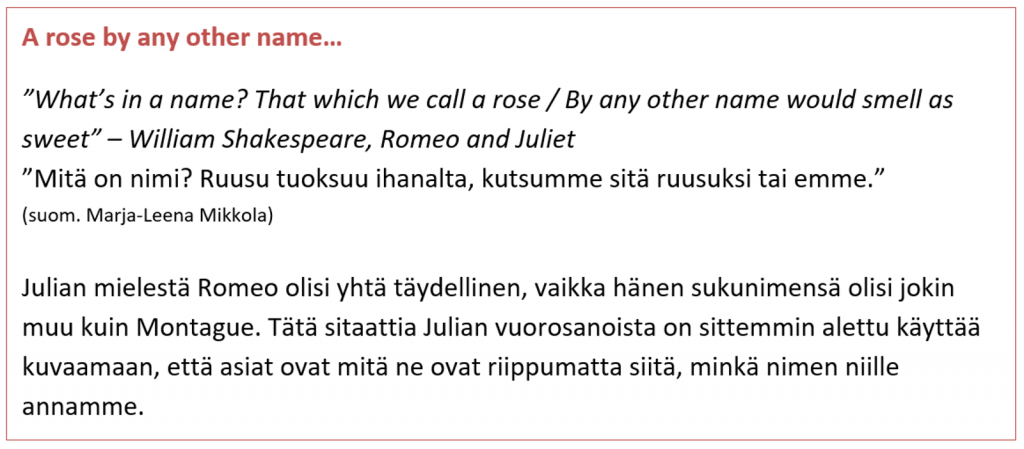
Skenaariota, strategisia vaihtoehtoja ja ruusun tuoksua

”Viisaat miehet varoittavat Suomen talouden pitkästä aavikkovaelluksesta, mutta heidän skenaarionsa on oudon synkkä.”

”Kumpi on pahempi skenaario meille: Suomi tukee taloudellisesti Italiaa vai täysin USA/Kiina säännöillä pelaava maailmantalous?”

Moottoriurheilupiireissä on noussut ilmoille skenaario, että formula ykkösissä voisi ajaa tulevaisuudessa jälleen kaksi Schumacheria.”

Ilmavoimien harjoituksissa on koulutettu henkilöstöä taktisesti haastavissa skenaarioissa, ja koronapandemian aikana on tehty epidemiologisia skenaarioita. Myös muita skenaarioita on tänä keväänä julkaistu. Skenaariot näkyvät uutisvirrassa eri yhteyksissä ja näyttäytyvät nopeasti katsottuna synonyyminä vaihtoehdoille. Strategiakeskustelussa skenaarioilla viitataan usein organisaation omissa käsissä oleviin strategisiin vaihtoehtoihin, mutta myös erilaisiin ennusteisiin, kvantitatiivisiin malleihin, taloudellisiin mallinnuksiin tai herkkyysanalyyseihin. Skenaario kuin skenaario – mitä väliä sillä on?

Skenaariot ja strategiset vaihtoehdot – eri työkalut eri käyttöön

Mitä yhteistä on skenaarioilla ja strategisilla vaihtoehdoilla? Molemmat sisältävät vaihtoehtoja. Onko siis väliä, jos strategisia vaihtoehtoja kutsutaan skenaarioiksi? On. Skenaariot kuvaavat organisaation ulkoisen toimintaympäristön kehittymisen vaihtoehtoja, kun taas strategiset vaihtoehdot jäsentävät organisaation omia kehitysvaihtoehtoja.

Skenaariotyön pioneeri Shell, joka on tehnyt skenaariota jo 50 vuotta, määrittelee skenaariot näin: ”Scenarios are plausible and challenging descriptions of the future landscape.” Näissä skenaarioiden valaisemissa tulevaisuuden maisemissa yritysten ja muiden organisaatioiden pitää suunnistaa ja suunnata toimintaansa. Päätöksentekoa varten on tarjolla vaihtoehtoisia suuntia ja keinoja – strategisia vaihtoehtoja.

Strategiset vaihtoehdot käsittelevät yrityksen omia tienhaaroja, valinnan paikkoja ja kehitysvaihtoehtoja esimerkiksi kasvuun liittyen. Mitkä ovat yrityksen markkinoihin liittyvät kasvun ulottuvuudet ja mitä vaihtoehtoja niihin liittyy? Entä mitkä ovat yrityksen kasvun mahdollistajat ja niihin liittyvät vaihtoehdot? Luovan ja systemaattisen prosessin avulla rakennettaan kasvun strategiset vaihtoehdot, käydään niistä jäsennettyä keskustelua ja arvioidaan vaihtoehtoja järjestelmällisesti eri näkökulmista ja määritellään yrityksen kasvustrategia.

Strategiset vaihtoehdot ovat hyödyllinen, mutta vähän hyödynnetty työkalu. Capfulin omien ja muiden tekemien tutkimusten mukaan suuri osa yrityksistä on sitä mieltä, että strategisia vaihtoehtoja tulisi käyttää osana strategiatyötä ja päätöksentekoa. Mutta käytännössä vain hyvin harvat yritykset käyttävät systemaattisesti strategisia vaihtoehtoja omassa strategiatyössään – syinä esimerkiksi vakiintuneet päätöksentekoprosessit, konfliktien välttely ja kiire.

On selvää, että koronakriisin keskellä kannattaa tehdä vaihtoehtoisia skenaarioita epävarmuuden täyttämän toimintaympäristön kehityksestä ja ennakoida, milloin ja miten tulemme ulos kriisistä ja miltä maailma näyttää kriisin jälkeen. Tämän ohella on syytä ottaa kaikki hyöty irti strategisista vaihtoehdoista – tunnistaa, kuvata ja arvioida niitä eri kriteereitä ja skenaarioita vasten – ja tehdä perusteltuja valintoja. Strategiatyössä skenaariot ja strategiset vaihtoehdot eivät siis ole sama asia: on olemassa ulkoisen toimintaympäristön vaihtoehtoisia kehityskulkuja ja yrityksen sisäisiä vaihtoehtoja. Skenaariolähtöinen strategiatyö on eri asia kuin vaihtoehtolähtöinen strategiatyö. Jos ne näyttävät ja tuoksuvat strategisilta vaihtoehdoilta, miksi kutsuisimme niitä skenaarioksi, kun ne itse asiassa ovat strategisia vaihtoehtoja.

Skenaariot vai ennusteet – mitä väliä sillä on?

Skenaariotyön pioneerit – kuten Herman Kahn, Pierre Wack, Shell, SRI International ja GBN – valitsivat alusta lähtien linjan, jonka mukaan skenaarioissa ei käytetä todennäköisyyksiä ja kaikki skenaariot määritellään mahdollisiksi maailmoiksi. Tämä saattoi tapahtua osittain reaktiona yritysten liialliseen riippuvuuteen kvantitatiivisesta ennustamisesta. Ennustamisvirheet olivat 1970-luvun alusta lähtien yleistyneet, ja ne olivat toisinaan dramaattisia ja välillä kiusallisen suuria. Mitkä olivat johtopäätökset ja mitä tämä tarkoittaa tänään?

  1. Skenaarioita tulee käyttää mahdollisten maailmojen tunnistamiseen, ei todennäköisten maailmojen ennustamiseen.
  2. Kaikkia skenaarioita kannattaa pitää yhtä todennäköisinä, jotta jokaisen skenaarion vaikutukset analysoidaan riittävän huolellisesti ja kutakin skenaariota varten rakennetaan varautumistoimenpiteet.
  3. Skenaarioiden tulee paljastaa monia mahdollisia tulevaisuuksia. Tarkoituksena ei ole löytää uskottavinta tai joidenkin oletusten pohjalta todennäköisintä skenaariota.

Aitojen epävarmuuksien ja epäjatkuvuuksien, suurten rakenteellisten muutosten ja dramaattisten shokkien ennakointiin tarvitaan todennäköisyysajattelusta vapautettua menetelmää, joka antaa mahdollisuuden ajatella jotain sellaista, mitä ei edes voi ajatella. Menneen ja nykyisen maailman tietoon, rakenteisiin, syy-seuraus-suhteisiin, jatkuvuuksiin ja trendeihin perustuvien ennusteiden avulla ei voi ennakoida suuria rakenteellisia muutoksia.

Miksi skenaariotyössä korostetaan skenaarioiden ja ennusteiden eroa? Nykyhetken jatkuvuuden tyrannia ja tulevaisuuden ennustamisen paradigma hallitsevat ja ohjaavat ajatteluamme ja havainnointiamme – usein tiedostamatta. Skenaariot ovat työkalu paitsi epävarmuuden käsittelyyn myös päätöksentekijöiden ajatusmallien uudistamiseen. Jotta tämä olisi mahdollista, on skenaariotyössä vältettävä todennäköisyyksiin liittyvät sudenkuopat ja päästettävä irti hallitsevista ajattelutavoista.

Tie skenaarioajattelusta ennustamisen maailmaan on kivetty todennäköisyyksillä: kun aletaan puhua tulevan kehityksen todennäköisyydestä, siirrytään strategiatyössä skenaarioista ennusteisiin. Skenaariot auttavat esittämään oikeita kysymyksiä, kun taas ennusteiden avulla etsitään oikeita vastauksia. Monet strategiset virheliikkeet saavat alkunsa siitä, että yritetään löytää oikea vastaus, vaikka ei ole löydetty vielä edes oikeita kysymyksiä.

Ennusteilla ja skenaarioilla on eri käyttötarkoitukset, ja nämäkin käsitteet, menetelmät ja työkalut on järkevää pitää strategiatyössä erillään. Ennusteeseen sisältyy lähtökohtaisesti epävarmuutta, mutta tämä ei tee ennusteesta skenaariota. Jos se näyttää ja tuoksuu ennusteelta, sitä kannattaa kutsua ennusteeksi.

Mitä skenaariot ovat ja mitä ne eivät ole strategiatyössä?

Koronakriisi on lisännyt kierroksia skenaariotyöhön. Tulevaisuus on nyt poikkeuksellisen epävarma, ja skenaarioiden avulla epävarmuutta on mahdollista käsitellä mielekkäällä tavalla. Skenaariotyön tuoksinassa on kuitenkin hyvä pitää erillään ainakin skenaarioiden, strategisten vaihtoehtojen ja ennusteiden käsitteet.  Alla on vielä lyhyt tiivistelmä siitä, mitä skenaariot ovat ja mitä ne eivät ole strategiatyössä.

Skenaariot eivät oleSkenaariot ovat
Ennusteita, joiden avulla pyritään tietämään ja osoittamaan todennäköisin tulevaisuus.Kokonaisvaltaisia kuvauksia vaihtoehtoisista ja mahdollisista tulevaisuuden toimintaympäristöistä.
Organisaation sisäisten asioiden vaihtoehtoista kehitystä kuvaavia. Organisaation ulkoisen toimintaympäristön kehitystä kuvaavia.
Numerolähtöisiä herkkyysanalyysejä tai vaihteluita perusennusteen ympärillä (high-medium-low).Kvalitatiivisiin muutoksiin ja erilaisiin perusoletuksiin perustuvia dynamiikaltaan erilaisia kuvauksia.
Yhteen epävarmuustekijään tai tapahtumaan liittyviä kuvauksia tai niiden varautumissuunnitelmia (contingency planing).Systeemisiä useiden muutostekijöiden välisiä vuorovaikutussuhteita ja niiden kokonaisuuksia hahmottavia vaihtoehtoja.
Visioita, strategioita tai politiikkaa.Vaihtoehtoisia ulkoisia konteksteja visioiden, strategioiden ja poliittisten agendojen laatimiselle.

Viime vuonna Capful teki yhteistyötä Shellin kanssa skenaarioprojektissa, jossa tutkittiin digitalisaation vaikutuksia yhteiskuntaan. Hyödynsimme tässäkin hankkeessa monissa projekteissa jalostunutta induktiivista skenaariomenetelmäämme ja  Scenario BuilderTM -työkaluamme. Tämä algoritmeja hyödyntävä interaktiivinen työkalu helpottaa skenaarioiden rakenteen ja logiikan ymmärtämistä ja tuottaa informatiivisen skenaariokartan, joka tekee vaihtoehtoisten skenaarioiden vertailusta helpompaa. Menetelmämme ja työkalumme olivat Shellin skenaariotiimille uusia, mutta skenaariotyön tarkoituksesta, perusperiaatteista ja käsitteistä vallitsi yksimielisyys. Shellin skenaariotiimin jäsenet kertoivat myöhemmin, että menetelmän, työkalujen ja sisältöosaamisen lisäksi, yhteisymmärrys skenaariotyön lähtökohdista ja käsitteistä auttoi meitä pääsemään heidän kanssaan yhteistyöhön. Kansainvälisen skenaarioyhteisön ytimessä skenaariotyöhön liittyvillä käsitteillä onkin aika lailla vakiintuneet määritelmät.

Kun yrityksessä tai organisaatiossa päätetään aloittaa skenaarioperusteinen strategiaprojekti, on hyvä tehdä osallistujille selväksi työskentelyn pelisäännöt. Prosessin tarkoitus ei ole pönkittää virallisia tai todennäköisiä tulevaisuuksia tai hakea tukea johdon näkemyksille. Päinvastoin, nyt on mahdollisuus kaivaa esille asioita, jotka asettavat viralliset totuudet kyseenalaiseksi tai ovat muuten ”kiellettyjä” tai ”mahdottomia”. Jotta työskentelystä saadaan paras hyöty irti, on myös syytä kirkastaa käsitteet ja auttaa projektin osallistujia erottamaan skenaarioiden valloittava tuoksu strategisten vaihtoehtojen ja ennusteiden aivan yhtä ihanista tuoksuista.

Lainaukset: MustReadUusi SuomiMTV Uutiset

Kirjoittaja:


Arto Kaunonen
Founder, Senior Partner
050 356 0717
arto.kaunonen(at)capful.fi

Mitä hyötyä yrityksille on ennakoinnista ja skenaarioiden tekemisestä?

Yksinkertainen vastaus on, että tulevaisuutta ennakoivat yritykset ovat parempia kuin muut. Strateginen ennakointi edistää tutkitusti yritysten pitkän aikavälin menestymistä. René Rohrbeckin ja Menes Etingue Kumin vuonna 2017 julkaistu tutkimus osoitti, että ennakointia hyödyntäneet yritykset olivat markkinoidensa ylisuorittajia. Vuosien 2008 ja 2015 välillä nämä yritykset olivat 33% tuottavampia ja 200% markkina-arvoltaan suurempia verrattuna yrityksiin keskimäärin. Vahvemmat ennakointikäytännöt kertoivat siis suoraan siitä, kuinka menestynyt yritys oli 7 vuotta myöhemmin. Ja erot olivat tutkimuksen tulosten mukaan huomattavia. 

Mutta mihin tämä menestys perustuu? Laajemmin tarkasteltuna ennakoinnilla ja erityisesti skenaarioiden käytöllä on ainakin viisi keskeistä hyötyä yrityksen pitkän aikavälin menestyksen takaajina. 

1. Ennakointi auttaa luomaan tulevaisuuslähtöisiä strategioita ja visioita.  

Jokainen strategia ja visio perustuvat johonkin maailmankuvaan ja käsitykseen tulevaisuuden toimintaympäristön kehityksestä. Mikäli emme ymmärrä pitkän aikavälin muutoksia tai tiedosta oman ajattelumme ja mielipiteidemme lähteitä, emme voi määrittää pitkällä aikavälillä toimivia tavoitteita ja strategiaa. Skenaario- ja muut ennakoinnin menetelmät tarjoavat työkaluja tähän. Strategiasta ja siitä johdetuista päätöksistä tulee sitä parempia, mitä enemmän niitä on haastettu erilaisilla tulevaisuudesta nousevilla muutoksilla ja päivitetty vastaamaan tulevaisuuden tärkeimpiin haasteisiin. 

2. Investoinnit ja kehitystoimenpiteet tulee suunnitella, arvioida ja päättää laaja-alainen tulevaisuustieto huomioiden.  

Jokainen investointipäätös tehdään johonkin tulevaisuudenkuvaan uskoen. Se mihin rahaamme ja aikaamme käytämme, kertoo siitä, mihin uskomme ja mitä toivomme tapahtuvaksi. Investointeja ja kehitystoimenpiteitä päätettäessä pitääkin kyetä ottamaan huomioon laaja-alaisesti erilaisia tulevaisuuteen vaikuttavia tekijöitä sekä päätösten lyhyen ja pitkän aikavälin vaikutuksia. Ennakointi auttaa poistamaan yksilöille tai tiiviissä yhteistyössä toimiville ryhmille tyypillistä samankaltaisuudesta, samasta tietopohjasta syntyvää vaihtoehdottomuutta ja ajattelun monipuolisuuden kaventumista.  

3. Ennakointi ja skenaariot auttavat varautumaan erilaisiin tulevaisuuksiin.  

Ehkäpä selkein, erityisesti skenaarioiden avulla saatava hyöty on niiden tuoma erilaisten vaihtoehtoisten maailmojen, toisin olemisen mahdollisuuksien kirjo. Kun erilaisia tulevaisuuksia, kehityskulkuja ja tapahtumia voidaan spekuloida, niihin pystytään myös varautumaan. Skenaarioiden avulla muodostetut varautumissuunnitelmat parantavat yrityksen reagointikykyä ja muutosvalmiutta yllättävienkin toimintaympäristön muutosten tullessa eteen. 

4. Ennakoinnin avulla tehostetaan toimintaympäristön seurantaa ja pystytään tunnistamaan tärkeitä seurattavia kehityskulkuja.  

Toimintaympäristön seurannassa voidaan keskittyä organisaatioille keskeisiin muutoksiin ja päivittää niitä tilanteen muuttuessa tarpeen mukaan. Yksittäisten hankkeiden sijaan organisaation ennakointia voidaan toteuttaa jatkuvana prosessina ja tätä kautta myös koko organisaation kehitys on reaaliaikaisempaa sekä ketterämpää.  

5. Ennakoinnin ja skenaarioiden avulla voidaan tunnistaa mihin voidaan vaikuttaa

Yrityksen vaikutukset yhteiskuntaan ovat usein huomattavasti moninaisemmat kuin on tapana tuoda esille ja monet yrityksen toiminnan sekä positiiviset että negatiiviset ulkoisvaikutukset jäävät helposti piiloon. Skenaariot ja ennakointi pakottavat asettamaan oma toiminta laajempaan kontekstiin ja ottamaan huomioon toiminnan pitkän aikavälin vaikutukset. Tästä seuraa, että pystymme ymmärtämään omaa rooliamme tulevaisuuden luomisessa. Mihin vaikutamme, mihin voisimme vaikuttaa, mihin emme voi vaikuttaa ja mihin meidän ehkä tulisi pyrkiä vaikuttamaan. Tätä kautta pystymme myös selittämään itsellemme mikä oma ja organisaatiomme rooli sekä yhteiskunnallinen vaikuttavuus ovat. 

Kuten Rohrbeckin ja Kumin tutkimus osoitti, ennakointi kiinteänä osana organisaation toimintaa on yksi parhaimmalla korolla tehtäviä investointeja, mitä yritys voi tehdä. Lyhyesti sanottuna, tulevaisuuteen katsovat ja tulevaisuutta tekevät yritykset pärjäävät muita paremmin.  

Oikeat kysymykset kysyä itseltäsi ovatkin, onko organisaatiosi varautunut tulevaisuuteen riittävästi, ymmärrätkö mitkä asiat muuttavat tulevaisuuden toimintaympäristöjä ja miten yrityksesi on tekemässä tulevaisuutta todeksi? Koska viime kädessä ennakointi auttaa parantamaan yrityksen kykyä tuottaa arvoa yhteiskunnalle, kykyä vastata tulevaisuuden keskeisiin yhteiskunnallisiin haasteisiin ja tarpeisiin. Ja tämä myös ratkaisee sen, kuinka menestynyt yritys on tulevaisuudessa. 

Tule mukaan oppimaan lisää skenaarioista Capfulin ilmaiseen skenaariokoulutukseen tiistaina 23. marraskuuta klo 9-11! Katso lisätiedot ja ilmoittaudu mukaan täältä! 

alt


Risto Lätti
Senior Advisor
040 932 9520
risto.latti(at)capful.fi
Want to talk more?
Let's get in touch